Buying a new property is one of the most significant investments you will ever make. While most people remember to check the roof, the heating system, and the electrical panel, one critical component is often overlooked: the waste line buried deep underground. Investing in a professional home buyer sewer inspection is the only way to ensure you aren't inheriting a thousand-dollar disaster that lies hidden beneath the surface.
Standard home inspections are essential, but they have limitations. A typical inspector will run the faucets and flush the toilets to ensure the water is draining, but they cannot see the actual condition of the pipes. At NY Sewer Cam, we provide a specialized sewer scope for home buyers that goes beyond the surface to reveal the true state of a property’s plumbing infrastructure. By utilizing high-definition technology, we bridge the gap between "working now" and "safe for the long term."
Why a Sewer Camera Inspection is Essential Due Diligence
When you purchase a home, you are also purchasing the responsibility for the sewer lateral—the pipe that connects the house to the city’s main line. If this pipe is cracked, collapsed, or clogged with invasive roots, the repair costs can be staggering. Incorporating a main line video inspection into your real estate due diligence can save you from unexpected expenses immediately after closing. This is not just a recommendation; in older urban environments like New York City and Long Island, it is a necessity for financial protection.
Common issues found during a home buyer sewer inspection include:
- Tree Root Intrusion: Roots are naturally drawn to the moisture and nutrients in sewer lines. Once they penetrate a pipe through a tiny crack or joint, they can grow into massive blockages that trap debris and cause structural damage.
- Pipe Bellies: A "belly" occurs when a section of the pipe sinks due to soil erosion, shifting ground, or improper installation. This creates a low point where water and solids collect, leading to chronic standing water and eventual backups.
- Structural Failure: Older homes in Brooklyn and Queens often have clay or cast iron pipes that can corrode, crack, or shift over time. Clay pipes are particularly susceptible to shearing at the joints.
- Debris and Scale: Heavy buildup of minerals or grease may indicate a need for pipe descaling or professional hydro-jetting, which are maintenance costs you should know about before signing a contract.
- Offset Joints: This occurs when two sections of pipe become misaligned. This creates a lip that catches toilet paper and waste, leading to frequent "soft" clogs.
Many buyers assume that if the water goes down the drain today, the system is functional. However, a pipe can be 90% blocked by roots and still allow a single toilet flush to pass through. It isn't until the full household moves in—showering, running the dishwasher, and doing laundry simultaneously—that the system fails. NY Sewer Cam identifies these ticking time bombs before they become your problem, allowing you to walk into your new home with confidence rather than fear.
The Hidden Risks of Older Infrastructure
In the New York metropolitan area, infrastructure age is a major factor that every prospective owner must respect. In many parts of Brooklyn, Manhattan, and Staten Island, sewer lines may be over a century old. These lines were often constructed from clay tile, orangeburg, or cast iron—materials that have a finite lifespan and were never intended to last forever.
Over decades, the ground shifts due to seasonal temperature changes and the sheer weight of urban development. When a separation occurs, it creates an "offset" where waste catches, eventually leading to a full blockage or a sinkhole in your front yard. NY Sewer Cam technicians often see pipes that have "vitrified," becoming brittle and prone to cracking under the weight of the soil above or the vibration of heavy street traffic.
Without a pre-purchase sewer camera test, there is no way to know if the pipe under your potential front yard is a solid conduit or a crumbling mess held together by luck and packed dirt. A thorough lateral sewer check during the home buying process provides the empirical evidence needed to request repairs or price concessions from the seller. In a market where every dollar counts, you cannot afford to skip this step.
Understanding the Different Pipe Materials
During a main line video inspection, we often identify several different materials, each with its own set of risks. Understanding these helps put the inspection report in context:
- Clay Pipes: Common in older NYC homes, clay is durable against corrosion but very susceptible to root intrusion and cracking from ground shifting.
- Cast Iron: Found in many mid-century homes, cast iron is strong but suffers from "scaling"—a process where the inside of the pipe rusts and becomes rough, slowing down the flow and catching debris.
- Orangeburg: Made of wood pulp and tar, this material was used mid-century and is known for losing its shape and flattening over time. If we find Orangeburg during a sewer lateral inspection, it almost always necessitates replacement.
- PVC/Plastic: While modern and smooth, even PVC can fail if it wasn't bedded in gravel properly, leading to the aforementioned "bellies" or low spots.
The Value of an Independent Sewer Evaluation
One of the most important factors to consider when booking a sewer camera inspection in your area is the independence of the inspector. NY Sewer Cam does not perform repairs. We provide an independent sewer evaluation, meaning our only goal is to give you an honest, unbiased look at the main waste line health of the property. Because we don't sell repair services, we have no incentive to "find" problems that don't exist.
This independence is a crucial distinction in the plumbing industry. Many traditional plumbing companies offer "free" or low-cost camera inspections as a "loss leader" to get their foot in the door. Their ultimate goal is often to sell expensive excavation, trenchless relining, or full replacements that may not even be necessary. By contrast, NY Sewer Cam provides a purely diagnostic service. If we see a problem, we show it to you in high definition, explain the severity, and leave the choice of who fixes it entirely up to you. This transparency is why real estate attorneys, home inspectors, and savvy brokers consistently recommend NY Sewer Cam for their clients' due diligence.
Our residential inspections are competitively priced to provide peace of mind. In Nassau County, Staten Island, and Queens, residential inspections start at $249. For those looking for a real estate sewer check in Brooklyn, the cost starts at $299, while Manhattan residential inspections start at $599. We provide high-resolution video, photos of significant findings, and a digital summary that you can share with your attorney or the seller during negotiations.
Navigating the Inspection Process
The process of a sewer scope is relatively non-invasive and typically takes between 45 and 90 minutes. Our technicians locate the "cleanout," which is an access point to the main sewer line, usually found in the basement, a crawlspace, or sometimes outside the home near the foundation. If no cleanout is available, we can sometimes access the line through a roof vent or by removing a toilet, though the basement cleanout is always the preferred method.
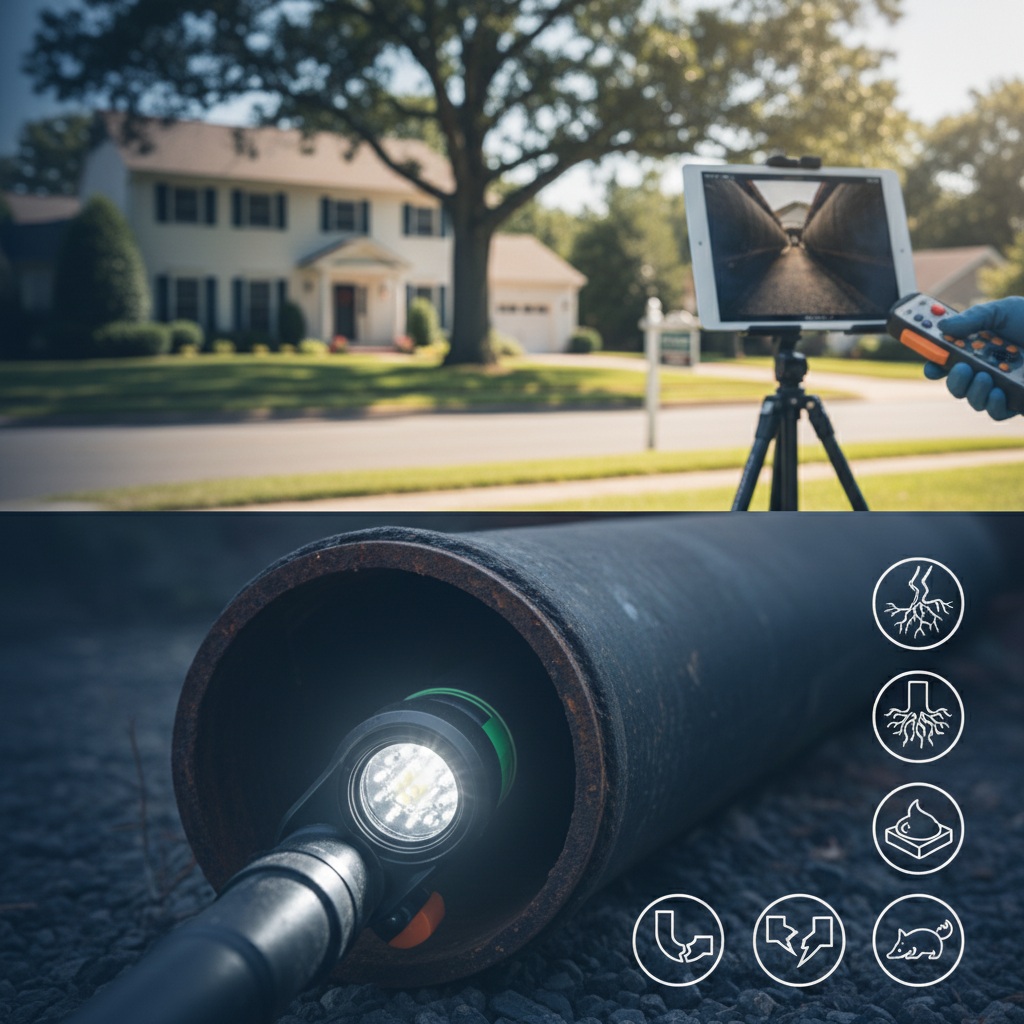
We then thread a high-resolution, waterproof camera equipped with powerful LED lights through the pipe. As the camera travels toward the municipal main or septic tank, we watch the feed in real-time on a monitor. We are looking for anything that interrupts the smooth flow of water: jagged edges, standing water, thick mats of roots, or visible cracks. We track the distance of the camera so we can tell you exactly how many feet from the house a problem exists.
If we find a significant blockage or structural break, NY Sewer Cam can use a radio-frequency locator to pinpoint exactly where the issue is occurring on the property. This means that if a repair is needed, the plumber won't have to guess or dig up the entire yard; they can go straight to the specific spot we’ve identified. This precision can save homeowners thousands of dollars in unnecessary excavation and landscaping restoration costs.
What Happens After the Inspection?
Once the inspection is complete, you will receive a comprehensive report. This is a powerful tool in real estate negotiations. If the sewer line is found to be collapsed or heavily compromised, you have several options:
- Request a Repair: You can ask the seller to have a licensed plumber repair the line before closing.
- Negotiate a Credit: You can ask for a reduction in the sale price or a credit at closing to cover the estimated cost of the repair.
- Walk Away: If the damage is catastrophic and the seller refuses to budge, you have the information needed to decide if the investment is still worth it.
Without this proof, you would be solely responsible for a repair that could easily cost between $5,000 and $20,000 or more depending on the depth of the line and whether the street must be opened. In New York City, opening the street requires expensive permits and specialized contractors, making a sewer lateral inspection one of the highest-ROI tasks in your entire buying process.
Peace of Mind for the Modern Buyer
Even if the line is in good health, having a baseline video of your sewer system is valuable for future maintenance. You’ll know the exact material of your pipes, the location of the joints, and the general condition of the system. It’s like having an X-ray of your home’s digestive tract. For a few hundred dollars today, you are protecting yourself against the most expensive "invisible" repair a home can require.
In a competitive real estate market, knowledge is power. Sellers are often unaware of the condition of their own sewer lines, and a professional report from NY Sewer Cam brings objective facts to the table. Whether you are buying a charming brownstone in Park Slope, a colonial in Garden City, or a modern condo in Long Island City, the sewer line is the one thing you cannot afford to take for granted. NY Sewer Cam is committed to providing the clarity and technical expertise you need to make an informed, confident decision on your next property purchase.
NY Sewer Cam performs independent sewer inspections and does not sell or perform sewer repairs. Inspection reach is up to approximately 230 feet, where access and pipe conditions permit. Underground locating is available when appropriate.