For most homeowners and prospective buyers, the underground infrastructure of a property remains a mystery until something goes wrong. However, scheduling a professional sewer line inspection is one of the most proactive steps you can take to protect your investment and avoid unexpected emergencies that often arrive at the worst possible times.
At NY Sewer Cam, we specialize exclusively in providing a clear, unbiased look at what is happening beneath your feet. Because we are not plumbers and do not perform repairs, our goal is simple: to provide you with the most accurate information possible through high-definition video pipe inspection. This separation of services ensures that when we tell you a pipe looks clear, or conversely, that it has a structural flaw, you can trust the information is based on visual evidence rather than a desire to sell a construction project.
The Critical Role of Real Estate Due Diligence
When purchasing a property, a standard home inspection is a critical part of the process. However, these inspections typically focus on the roof, electrical systems, and interior plumbing. They rarely account for the condition of the lateral line—the pipe that connects the home to the city’s main sewer connection. A sewer scope inspection is often the only way to identify issues like clay pipe degradation or bellied pipes before you sign the closing papers and assume all liability.
In many older neighborhoods, particularly in areas like Queens and Brooklyn, the infrastructure is decades old. Without underground pipe imaging, a home buyer could inherit a failing system that requires a five-figure excavation shortly after moving in. Including a home buyer sewer inspection in your due diligence ensures you aren't blindsided by tree root intrusion or structural collapses that were hidden just a few feet below the surface.
The cost of replacing a main line in New York City can easily exceed $10,000 to $15,000 depending on the depth of the line and the amount of concrete that needs to be broken. When you consider that a professional assessment from NY Sewer Cam costs a fraction of that, the return on investment becomes clear. It is not just about finding problems; it is about having the leverage to ask a seller for a credit or a repair before the title transfers.
What We Look For During an Inspection
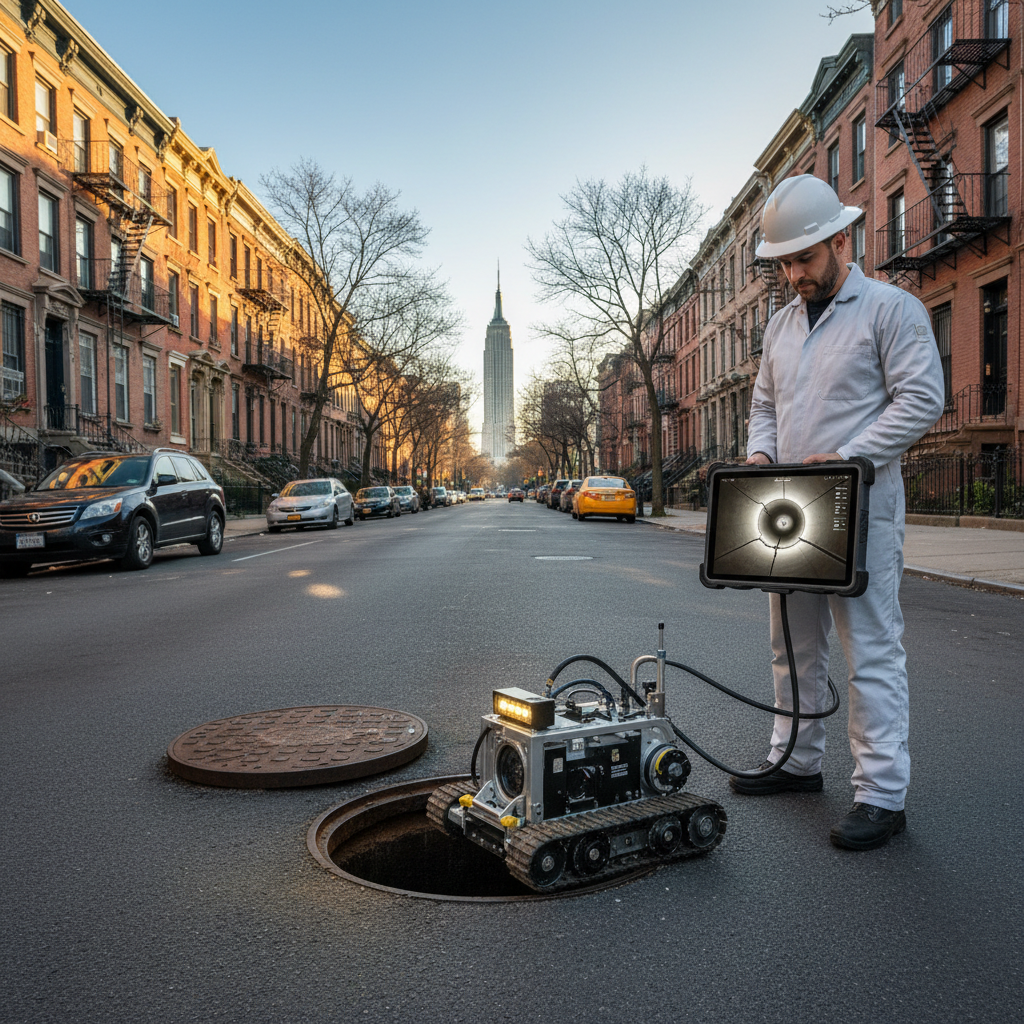
Our technicians use specialized camera equipment to navigate the twists and turns of your drainage system. During a sewer line inspection, we are looking for several key indicators of pipe health that the naked eye simply cannot detect from above ground.
Tree root intrusion is perhaps the most common issue we encounter. Roots are naturally drawn to the moisture and nutrients found in sewer lines. Over time, they can enter through small cracks or joints. Once inside, they grow rapidly, leading to major blockages and eventually cracking the pipe as they expand. Seeing these roots on camera allows you to address the problem with hydro-jetting before the pipe is completely destroyed.
We also look for pipe corrosion. Older cast iron pipes, which are prevalent throughout NYC, can scale or corrode internally. This creates a jagged surface that catches debris, toilet paper, and grease, leading to chronic slow drains. In some cases, the bottom of the pipe can rot out entirely, a condition known as a "channeled" pipe, which allows water to wash away the soil beneath it and creates voids.
Offset joints are another structural concern. Shifting soil or nearby construction can cause sections of the pipe to disconnect or become misaligned. These offsets create a "lip" where solids get caught, eventually causing a total backup. Furthermore, we look for "bellies," or low spots in the line where water and sediment pool. These are often caused by poor initial installation or soil settling, and they are notorious for causing recurring clogs.
Advanced Technology in the Field
The equipment used by NY Sewer Cam is a far cry from a simple flashlight and mirror. We utilize high-resolution, waterproof cameras mounted on flexible push rods. These cameras feature self-leveling heads, ensuring that the orientation of the video remains upright so you can clearly tell the difference between the top and bottom of the pipe.
As the camera travels through the line, a high-frequency transmitter, often called a "sonde," allows us to locate the exact position and depth of the camera head from above ground. If we find a break 15 feet out from the house at a depth of 6 feet, we can mark that spot on your lawn or driveway. This precision saves homeowners thousands of dollars in exploratory digging. Instead of trenching the entire yard, a plumber can go straight to the problem area.
Understanding Pipe Materials and Their Lifespan
The material of your sewer line plays a massive role in its longevity. In many parts of Brooklyn and Queens, we still see vitrified clay pipe. While clay is incredibly durable and doesn't rust, it is brittle and prone to cracking under the pressure of heavy vehicles or shifting soil. The joints in clay pipes are also the most common entry points for tree roots.
Cast iron was the standard for many decades, but it has a finite lifespan of about 50 to 70 years. Eventually, the interior becomes so rough that it functions more like sandpaper than a smooth conduit. Modern homes typically use PVC, which is excellent for resisting roots and corrosion, but even PVC can suffer from "bellies" if the bedding material wasn't compacted correctly during installation. NY Sewer Cam provides the visual proof of which material you have and what condition it is in, regardless of the age of the home.
Why Choose an Independent Specialist?
The biggest advantage of working with NY Sewer Cam is our independence. Many companies that offer a sewer camera inspection near you also perform the actual repairs. This can sometimes create an inherent conflict of interest. A repair company might be tempted to recommend a full pipe replacement when a simple cleaning would suffice, simply because their business model relies on large construction contracts.
Because we do not sell repair services, our reports are independent and free from repair-sales incentives. We provide the raw footage and a detailed summary, giving you the leverage you need to negotiate repairs or simply have peace of mind. Our customers include residential buyers, commercial property managers, and even plumbers who want a second set of eyes on a difficult job. When you hire us, you are hiring a consultant, not a contractor looking for their next big dig.
Seasonal Impact on Sewer Systems
Many homeowners don't realize that the changing seasons in New York can impact their sewer lines. During the spring, increased rainfall can saturate the ground, causing older, weakened pipes to collapse under the weight of the heavy soil. During dry summers, tree roots become more aggressive in their search for water, often pushing deeper into sewer joints. A regular check-up with NY Sewer Cam can help catch these seasonal shifts before they turn into a basement flood during a storm.
Frequently Asked Questions
What exactly happens during a sewer camera inspection?
A sewer camera inspection is a non-invasive process where a high-definition camera is fed through your lateral line to identify blockages, cracks, or tree roots. It provides a visual confirmation of the pipe's interior condition without the need for digging or demolition.
What are the most common sewer problems found in Queens homes?
In Queens and across NYC, sewer lines are often decades old. Common issues include tree root intrusion, bellied pipes where the line has sagged, and structural collapses caused by shifting soil or the natural degradation of aging clay pipes.
Is a sewer line inspection included in a standard home inspection?
Standard home inspections focus on the interior structure and visible systems. They rarely check the underground lateral line connecting the house to the city main. A separate sewer scope is essential to avoid five-figure repair bills that often appear shortly after closing.
How much does a sewer line inspection cost in NYC?
At NY Sewer Cam, inspections start at $249. This is a transparent, flat rate that includes the recorded video footage and a digital summary of our findings.
Why should I hire an independent inspector instead of a plumber?
We provide an independent, unbiased assessment. Because we don't perform repairs, we have no incentive to find problems that aren't there. You get an honest look at your pipes, allowing you to get multiple quotes for repairs if they are actually needed.
Investing in a clear view of your property’s health is the only way to truly understand what you are buying or maintaining. Whether you are in the middle of a real estate transaction or just want to ensure your home is protected against future backups, NY Sewer Cam provides the professional clarity you need.
Please note: NY Sewer Cam provides inspection services only. We are not licensed plumbers and do not perform pipe repairs, cleaning, or installations.
Residential inspections start at $249 in Nassau County, Queens, and Staten Island. Brooklyn residential inspections start at $299, and Manhattan residential inspections start at $599. Manhattan commercial building inspections start at $1,200.